Custom Shirts With No Minimum Order: How to Get Just One Printed
Custom tee $35.85Ready-made from $19.99Printed in 5–7 working daysFree worldwide shippingNo minimum
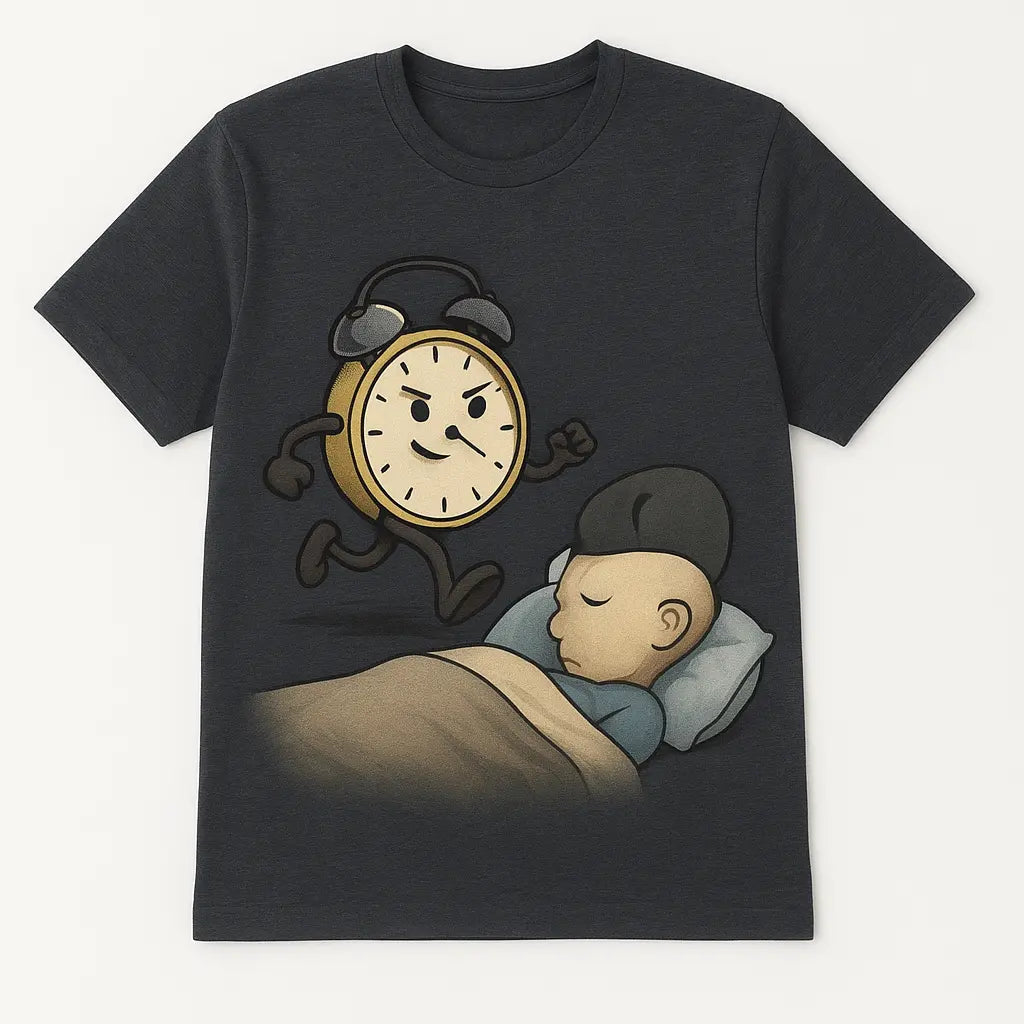
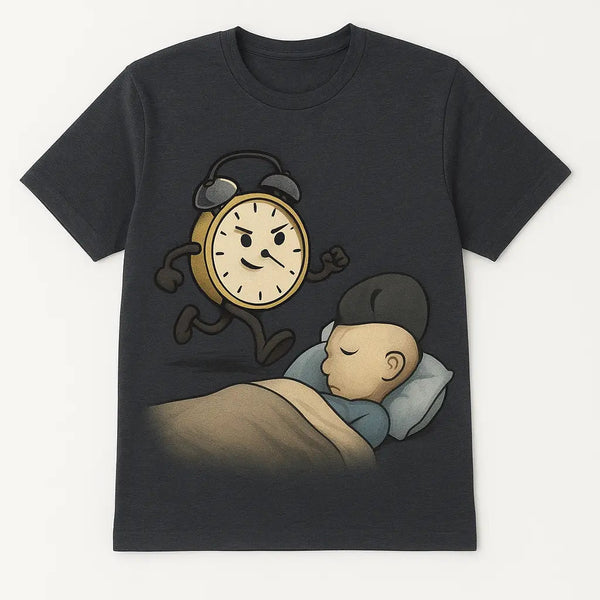
An alarm clock sneaking away, printed on a single made-to-order t-shirt
You want one custom shirt. The printer wants to sell you twelve. Here is why that happens, and how print-on-demand makes one-off custom apparel practical.
Explore Wearlie custom apparel → For a T-shirt specifically, shop custom T-shirts. You can also use the AI T-shirt generator when you need help creating the artwork.
Why minimums exist
Traditional screen printing needs setup work before the first shirt is printed. That setup makes a tiny order relatively expensive, so printers often set minimum quantities.
What changed
Direct-to-garment and other print-on-demand workflows allow the garment to be printed after purchase, making single-item ordering practical without buying a bulk run.
Tap any idea to see it on a tee — $35.85, free shipping
"No minimum" is not always what it sounds like
Before ordering one shirt, check for setup fees, artwork fees, shipping charges and quantity-based pricing. Compare the true total cost, not only the advertised base price.
What one custom shirt should cost
Wearlie currently lists printed T-shirts starting at $19.99. Current prices vary by garment, size and option; check the custom T-shirt collection for live products.
When one shirt is the right call
- A gift. A private joke rarely needs a dozen copies.
- Testing a design. Order one first, then decide whether you want a larger run.
- Something just for you. One-off personal apparel is exactly where no-minimum services are useful.
Tap any idea to see it on a tee — $35.85, free shipping
The tradeoff
No-minimum print-on-demand can take longer than picking up a mass-produced shirt because the garment is produced after you order. Check current production and delivery estimates before ordering.
Frequently asked questions
Can I really order just one custom shirt?
Yes, from a print-on-demand service that offers no-minimum ordering. Wearlie advertises no-minimum options on its custom apparel products.
Why do some printers require minimum quantities?
Setup costs for certain printing methods are easier to justify across a larger order.
Is one custom shirt more expensive per shirt?
It can be more expensive per unit than a large bulk run, but you avoid paying for unwanted extra shirts.
Do I need a design file?
Not necessarily. You can upload artwork or start with a design idea and use Wearlie's AI-assisted experience to help create apparel artwork.
Ready to order one? Start with custom T-shirts or explore the complete custom apparel range.