T-Shirt Size Chart: US, UK, EU and Australia Conversions
Custom tee $35.85Ready-made tees from $35.99Printed in 5–7 working daysFree worldwide shippingNo minimum
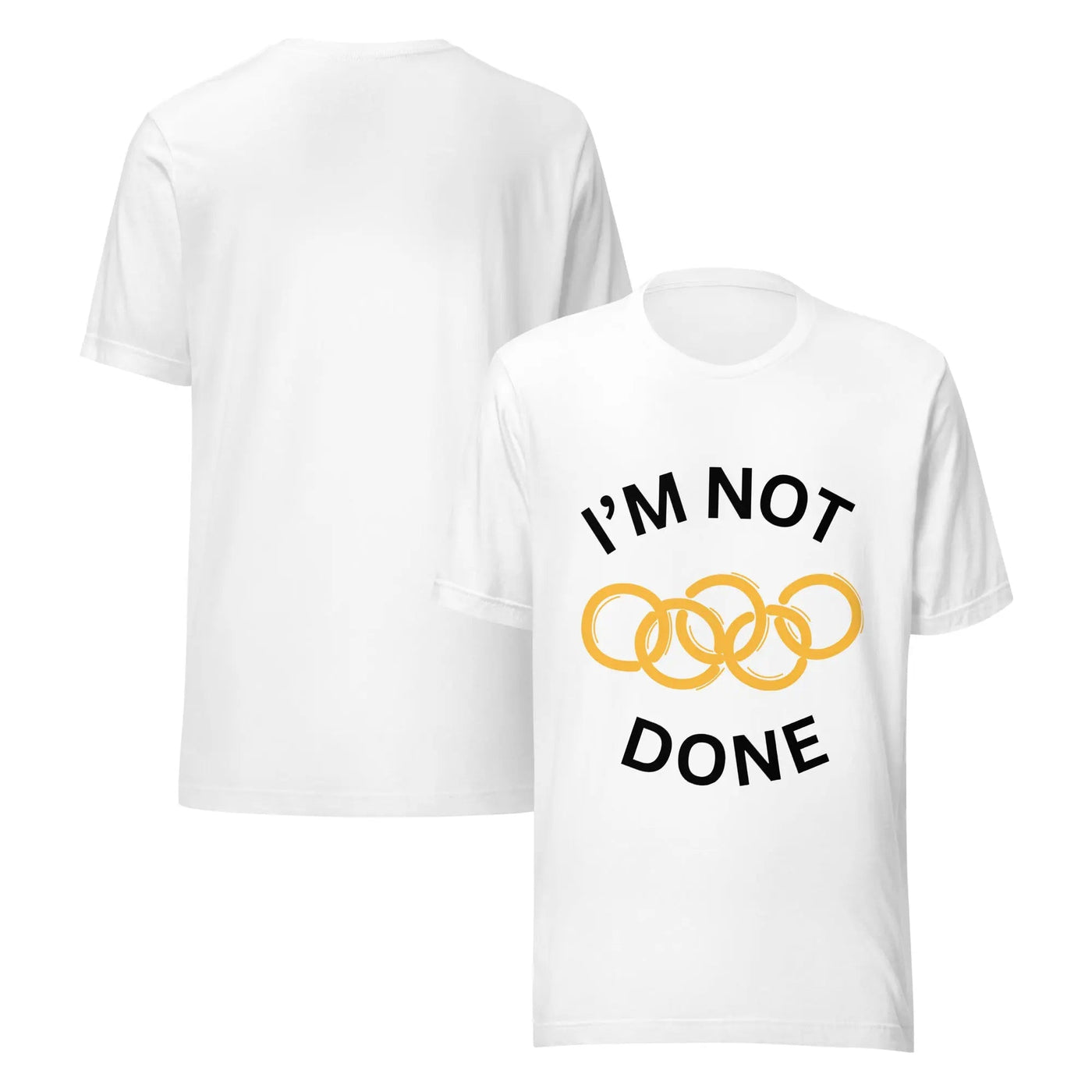
A unisex staple t-shirt shown front and back, used for the t-shirt size chart
The short answer: ignore the letter on the label. Measure a t-shirt you already own from armpit to armpit, then match that number to the chest width column below. Letter sizes vary between countries and brands. A chest measurement does not.
Unisex t-shirt size chart
All measurements are of the garment laid flat. Chest width is armpit seam to armpit seam. Double it for the full circumference.
| Size | Chest width | Chest (cm) | Body length | Fits chest |
|---|---|---|---|---|
| XS | 16.5 in | 42 cm | 27 in | 31–34 in |
| S | 18 in | 46 cm | 28 in | 34–37 in |
| M | 20 in | 51 cm | 29 in | 38–41 in |
| L | 22 in | 56 cm | 30 in | 42–45 in |
| XL | 24 in | 61 cm | 31 in | 46–49 in |
| 2XL | 26 in | 66 cm | 32 in | 50–53 in |
| 3XL | 28 in | 71 cm | 33 in | 54–57 in |
| 4XL | 30 in | 76 cm | 34 in | 58–61 in |
| 5XL | 32 in | 81 cm | 35 in | 62–65 in |
Manufacturing tolerance is about half an inch either way, which is normal across the industry.
Found your size? Every Wearlie tee is printed to order in sizes XS to 5XL, at the same price in every size. Type any idea and see it on a shirt in your size in about 40 seconds, or pick a ready-made design. Shipping is free worldwide.
US, UK, EU, Australia and Japan conversions
Letter sizing is not standardised internationally. This is the practical equivalence for adult tops.
| Unisex | US men's | UK men's | EU | AU men's | Japan |
|---|---|---|---|---|---|
| XS | XS | 32–34 | 42–44 | XS | S |
| S | S | 36 | 46 | S | M |
| M | M | 38–40 | 48–50 | M | L |
| L | L | 42 | 52 | L | XL |
| XL | XL | 44–46 | 54–56 | XL | 2XL |
| 2XL | 2XL | 48 | 58 | 2XL | 3XL |
Japanese sizing runs roughly one size smaller than US sizing, which catches people out on imported brands.
Women's sizes in unisex tees
This is where most ordering mistakes happen. Unisex tees are cut on a men's block: straighter through the waist, wider at the shoulder, slightly longer in the sleeve. The same letter therefore runs noticeably roomier than a women's cut.
| US women's | UK women's | AU women's | EU women's | Unisex — relaxed | Unisex — fitted |
|---|---|---|---|---|---|
| 0–2 | 4–6 | 4–6 | 32–34 | XS | XS |
| 4–6 | 8–10 | 8–10 | 36–38 | S | XS |
| 8–10 | 12–14 | 12–14 | 40–42 | M | S |
| 12–14 | 16–18 | 16–18 | 44–46 | L | M |
| 16–18 | 20–22 | 20–22 | 48–50 | XL | L |
Rule of thumb: most people who wear a UK 12 or US 8 take a unisex medium for a relaxed fit, or a small for something closer to the body.
Hoodie and sweatshirt sizing
Hoodies sit over another layer, so most people take one size up from their t-shirt size.
| Your t-shirt size | Hoodie, standard fit | Hoodie, oversized |
|---|---|---|
| S | S | M |
| M | M or L | L |
| L | L or XL | XL |
| XL | XL or 2XL | 2XL |
Layering over a jumper rather than a t-shirt? Size up regardless.
How to find your size in two minutes
Measuring a shirt beats measuring your body, because it accounts for how you personally like clothes to sit.
- Pick a t-shirt you own and genuinely like the fit of.
- Lay it flat, front up, and smooth out the wrinkles.
- Measure straight across from one armpit seam to the other. That is your chest width.
- Find that number in the chest width column of the first table.
- For length, measure from the highest point of the shoulder straight down to the hem.
No tape measure? Use a phone charging cable, mark it with your thumb, then hold it against a ruler.
Measuring your body instead
If you have no shirt to hand, measure around the fullest part of your chest, under the arms, tape level and snug but not tight. Use the fits chest column rather than chest width — that one already includes ease.
Choosing between two sizes
| You want | Choose |
|---|---|
| Relaxed everyday fit | Size up |
| Oversized streetwear look | Two sizes up |
| Fitted, close to the body | True to size, or down |
| Layering over a jumper | Size up |
| Between sizes on chest | Prioritise chest, not length |
| Tall build | Size up for length |
Will it shrink?
Shrinkage happens mostly in length, and mostly on the first hot wash.
| Fabric | Expected shrinkage |
|---|---|
| 100% cotton, untreated | 3–5% |
| 100% cotton, pre-shrunk | 1–3% |
| 50/50 blend | 1–2% |
| Polyester | Almost none |
Washing cold and tumble drying low essentially removes the problem. If you dry on high heat routinely, allow roughly half a size of length loss. More in why t-shirts shrink.
Wearlie sizing
Our staple tee runs XS to 5XL in nine colours and uses the measurements in the first table. Hoodies and sweatshirts follow the size-up rule above. Available sizes are listed on each product page, since some designs offer a narrower range.
Worth knowing before you order: because every item is printed to order, custom items cannot be returned for a wrong size. Two minutes with a tape measure now avoids that. Still unsure? Email support@wearlie.com with your chest measurement and we will tell you which size to take.
Buying a gift and cannot ask their size? A custom cap is one size fits most and removes the risk entirely.
Frequently asked questions
How do I measure my chest for a t-shirt?
Measure around the fullest part of your chest, under the arms, tape level and snug but not tight. Or measure a shirt you own armpit to armpit and double it.
Do unisex t-shirts run big or small?
They run true to men's sizing, which feels large to anyone used to women's sizing. Many who wear a women's medium prefer a unisex small.
What size is a UK 12 in unisex?
A unisex medium for a relaxed fit, or a small for a closer one.
What is the difference between chest width and chest size?
Chest width is the flat measurement across the garment. Chest size is your body circumference. Chest width is roughly half your chest size plus ease.
What size hoodie should I get if I wear a medium t-shirt?
A medium for a standard fit, a large if you like room or plan to layer.
Can I return a custom t-shirt if the size is wrong?
No. Custom printed items cannot be returned for change of mind or wrong size, which is why measuring first matters. Damaged or misprinted items are replaced free within 7 days.
Ready to order? Browse the blank staple tee, or design your own at custom shirts and t-shirts.