DTG vs Screen Printing vs Vinyl vs Embroidery: Which Should You Choose?
Custom tee $35.85Ready-made from $19.99Printed in 5–7 working daysFree worldwide shippingNo minimum
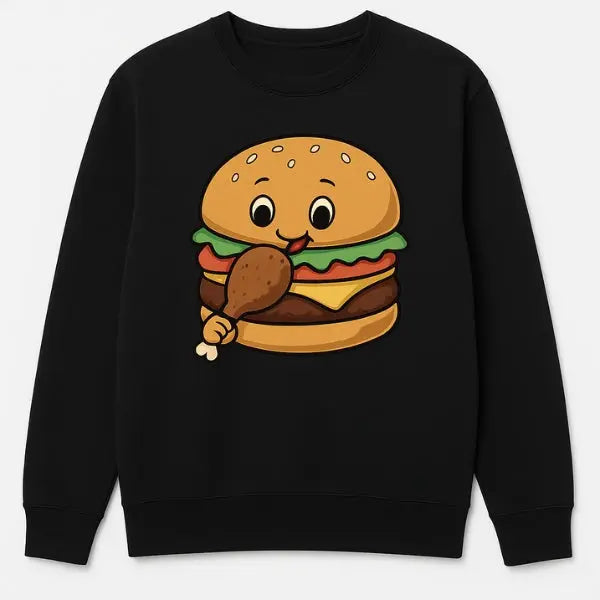
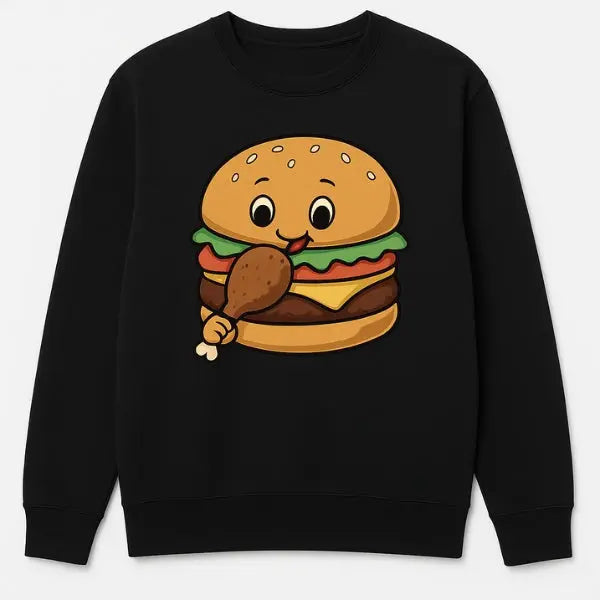
A bold design printed on a black sweatshirt, showing DTG print quality
Four methods dominate garment decoration. Each is genuinely the best choice in some situations and genuinely the wrong choice in others. Here is how to tell them apart.
Try the Wearlie AI designer now → Describe your idea in plain English and see it on a shirt in about a minute. No minimum order, free worldwide shipping.
At a glance
| DTG | Screen print | Vinyl | Embroidery | |
|---|---|---|---|---|
| Minimum order | 1 | 12–24 | 1 | 1–6 |
| Colours | Unlimited | 1–6 typical | Limited | Limited |
| Photo detail | Excellent | Poor | None | None |
| Feel on fabric | Soft, in the fibres | Slight layer | Sits on top | Raised stitching |
| Durability | Good | Very good | Fair | Excellent |
| Cost at volume | Flat | Drops sharply | Flat | Drops slowly |
Direct-to-garment (DTG)
An industrial inkjet sprays water-based ink into the fabric fibres, then heat-cures it. On dark garments a white underbase goes down first.
Choose it for: one to twenty shirts, photographic or multi-colour artwork, gradients, anything you cannot reduce to flat colour blocks.
Avoid it for: large runs, or heavy coverage on very dark polyester.
Screen printing
Ink is pushed through a stencil, one stencil per colour. The oldest method and still the industry default at volume.
Choose it for: 25+ garments with a simple one to three colour design. The ink lays down denser and brighter than DTG, especially on dark fabric, and per-unit cost falls off a cliff with quantity.
Avoid it for: small runs, photographs, or anything with gradients.
Heat transfer vinyl
A design is cut from sheets of coloured vinyl, weeded by hand, and heat-pressed onto the garment.
Choose it for: names and numbers, simple bold text, one-off personalisation. It is why every sports team uses it.
Avoid it for: detailed artwork, large coverage areas, or anything worn very frequently — vinyl sits on top of the fabric, reduces breathability, and can lift at the edges over years.
Embroidery
Thread stitched directly into the garment by a programmed machine.
Choose it for: polos, caps, jackets, workwear, and anywhere the garment should look premium. It outlasts every printed method by a wide margin.
Avoid it for: large designs, fine detail, gradients, or thin jersey fabric that puckers under stitching. Cost rises with stitch count, so a big design gets expensive fast.
Choosing in one question
How many, and how detailed?
- Few and detailed → DTG
- Many and simple → screen printing
- Names and numbers → vinyl
- Premium and long-lived → embroidery
Frequently asked questions
Which lasts longest?
Embroidery, comfortably. Among printed methods, properly cured screen printing edges out DTG, and both outlast vinyl.
Is DTG as good as screen printing?
Better for detail and colour range; slightly less opaque on dark fabric. For one to twenty garments it is the clear winner on cost.
Which method feels softest?
DTG. The ink sits in the fibres rather than on top, so a large print does not feel like a plastic panel.
Can you screen print a photograph?
Only through halftone simulation, which is expensive and rarely looks good. Use DTG.
Which method does Wearlie use?
DTG, because our designs are AI-generated, full-colour and usually ordered in ones and twos — exactly the case DTG exists for.
More in our custom shirts guide and print on demand explainer.